Seether's The Surface Seems So Far: A Guide to the Album and the Pieces It Inspired

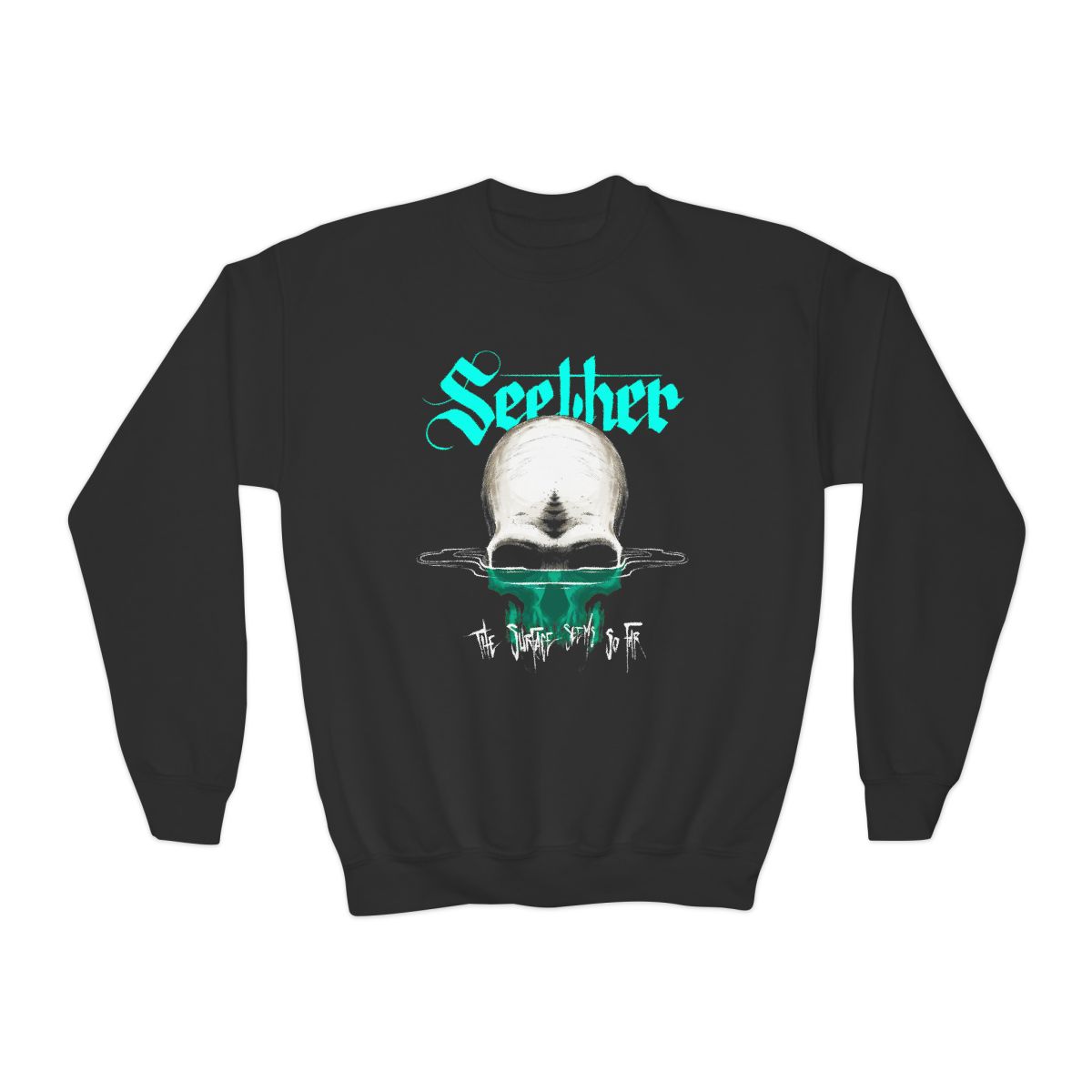
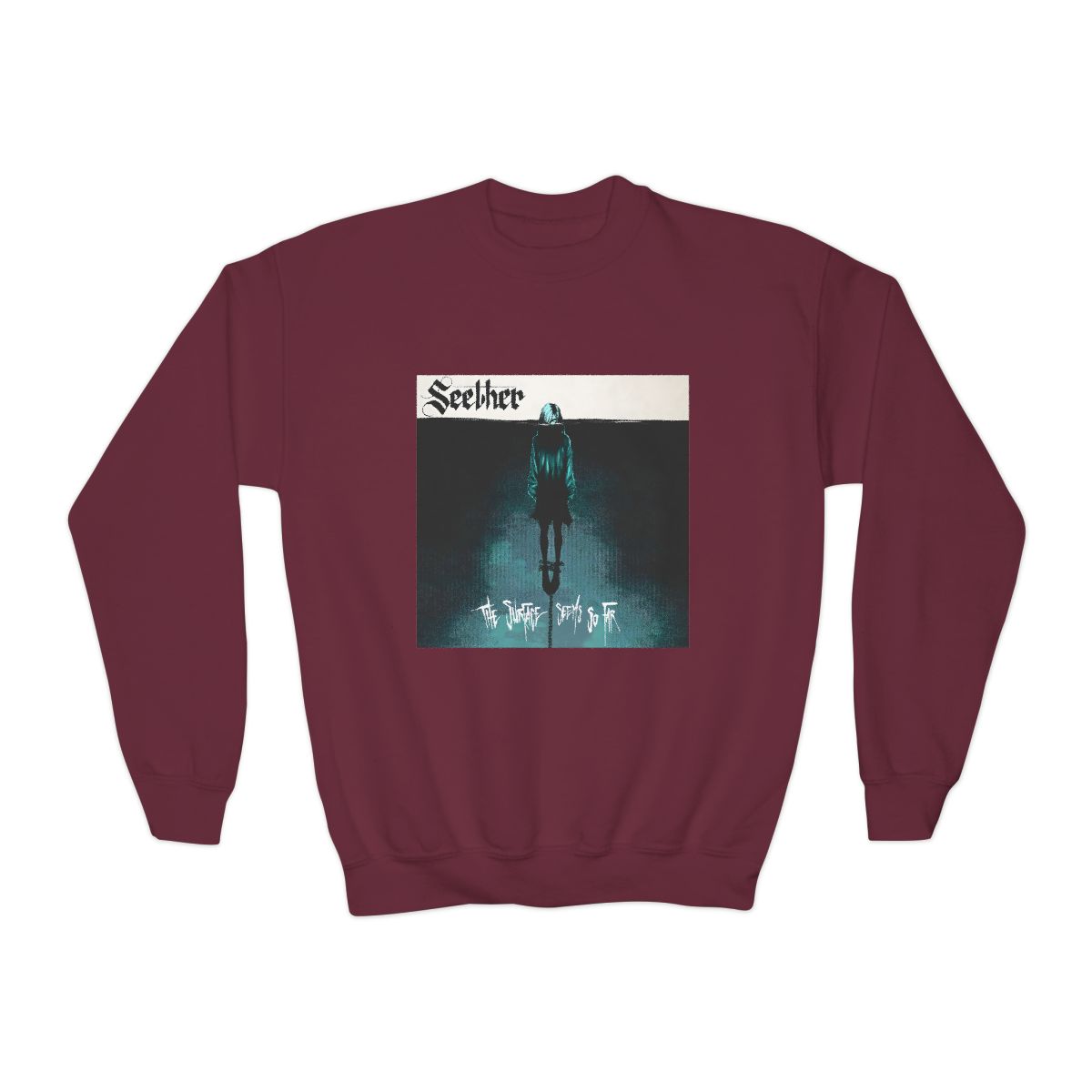
A pale skull half under teal water. A hooded figure standing in a lake, a chain at her ankles running down out of sight. If you have seen Seether's recent artwork, you already know the mood of their 2024 record: still on top, heavy underneath. That record is The Surface Seems So Far, and it has become the visual heart of the band's current merch.
This guide covers where the album sits in Seether's long run, what the main images show, and which pieces suit which listener, from a teenager discovering "Judas Mind" to the friend who has had "Fine Again" on repeat since 2002.
Who are Seether, in one paragraph?
Seether formed in Pretoria, South Africa, in 1999. The band first went by Saron Gas and released a debut album, Fragile, under that name in 2000. In 2002, around signing with Wind-up Records, they changed the name, because Saron Gas sounded too close to the nerve agent sarin; the new one comes from a Veruca Salt song. Today the lineup is Shaun Morgan on vocals and guitar, Dale Stewart on bass, John Humphrey on drums and Corey Lowery on lead guitar. The Seether About page tells the story in more detail, and it is a quick, worthwhile read before you pick a piece.
The music sits where post-grunge, hard rock and alternative metal meet, and the hits came early: "Fine Again" reached number one on US Active Rock in 2002, "Broken" with Amy Lee of Evanescence reached number 20 on the Billboard Hot 100, and "Remedy" gave the band its first number one on the US Mainstream Rock chart.
Where does The Surface Seems So Far fit?
It is Seether's ninth studio album, released on 20 September 2024 on Fantasy Records and produced by Shaun Morgan with Matt Hyde. It follows a run that starts with Disclaimer (2002) and moves through Karma and Effect, Finding Beauty in Negative Spaces, Isolate and Medicate, Poison the Parish and Si Vis Pacem, Para Bellum (2020). If you want the full picture, the band's walk through their albums from 2011 to 2024 puts the newest record in context with the ones just before it.
The first single, "Judas Mind", arrived on 10 July 2024. The era did not stop at the album either: a digital EP, Beneath the Surface, followed in 2026 as a continuation of it, and the single "Into the Ground" came out on 20 March 2026. So if the album's imagery feels like it has been around a while, that is because the story kept going.
What do the album's images actually show?
The title gives you the idea: something under the water, looking up at a surface that feels out of reach. The pieces built around the album keep coming back to that line between above and below.
- Chained Surface Girl. A hooded figure with hair over one eye stands half-submerged in dark teal water, her ankles bound by a chain that drops out of view. The blackletter Seether wordmark sits in the corner, with the album title scrawled in white beneath. It is the quietest and the heaviest of the set.
- Skull Waterline. A pale skull rises out of rippling water and fades into teal below the line, under a big teal blackletter logo. The back carries the logo again over a long centred list of dates and cities.
- Teal Burst. A ring of flame-like teal shards explodes around the white Seether name, with the album title beneath. Of all of them, this is the one that reads from across a room.
- Dripping Surface Lettering. No picture at all: just the album title, hand-lettered in muted teal, with long drips running from every letter.
- Surface Silhouette 2025. A black silhouette of a girl with rays fanning from her shoulders and two sharp stars at her sides, in front of huge grey letters spelling out the title.
Teal is the thread. Almost every piece from this era leans on it, which makes them easy to wear together and easy to spot as one record's world.
Which piece suits which listener?
A lot of the album's range comes in youth sizes, which makes it a good way to hand the next generation a band with more than two decades of records behind it. A few pairings:
- For the teenager who found Seether through "Judas Mind": the Skull Waterline youth hoodie. The skull and the waterline are striking without being gory, and the list of dates and cities on the back gives it the feel of a gig shirt.
- For the one who wants the album cover feeling: the Chained Surface Girl youth crewneck. It is moody, a little haunting, and it tells the album's story in one picture.
- For someone who likes loud colour: Teal Burst. The shards do all the work, so it suits a plain outfit.
- For a minimalist: Dripping Surface Lettering or the pale White Lettering design. Words only, no imagery, easy to wear every day.
- For the long-time listener: the Skull Waterline long sleeve tee, which comes in adult sizes, or the Surface Silhouette 2025 hoodie with its big back design.
How do you wear a moody piece without looking gloomy?
Dark artwork does not have to mean an all-black outfit. A few simple ideas:
- Let the teal lead. Pair a Teal Burst or Skull Waterline piece with light denim or grey joggers, so the colour in the artwork has room to stand out.
- Keep the back designs visible. Skull Waterline, Teal Burst and Surface Silhouette 2025 all carry something worth seeing on the back, so skip the backpack or the big jacket on the days you wear them.
- Layer the quiet ones. White Lettering and Dripping Surface Lettering sit well under an open flannel or a denim jacket, with just enough showing.
The short version
The Surface Seems So Far is Seether twenty-five years in, still digging into the same dark water that runs through "Broken" and "Remedy", and its artwork gives you a skull, a chained figure, a burst of teal and a title that drips. Start with the image that matches the listener you have in mind: the skull for drama, the chained girl for the album's story, the lettering for something quiet. Whichever you choose, it carries a band that started in Pretoria in 1999 and is still making records today.